8/30/2010

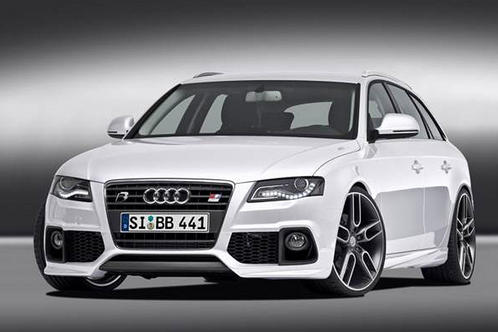
Audi A4 2010

It looks so much better than the stock 17inch rims that the standard His ride pictured above is the 1.8TFSI 160bhp spec that comes with the larger 18inch tires and rims. The car I tried is owned by a friend of mine and it is a car that is very familiar to me. Now this brings us to the current B8 Audi A4 1.8 TFSI launched around two years ago.

I would assume this trait would be lessened in the Quattro or All wheel drive version of the cars, but in the front wheel drive A4, it basically was awful. That A4 was a pretty good car and in 2.0TFSI form was a fast ride but the high speed handling on a twisty road was really bad. On the B7 A4 I remember driving it hard and it felt so nose heavy that even with a pointy nose it felt as if the steering was the one end of the stick and the other end was the large elephant hanging off of it. Having driven the current A6, the previous generation A4 (B7 series) as well as the earlier ones too, I have to say that massive understeer is the preferred way for these front wheel drive Audis to corner.

Did you know that it basically took Audi 126.5 million years to finally agree with everyone alive that having a tall 4,6 or 8 cylinder engine set up high and way in front of the front axle does not do wonders to the handling of their front wheel drive sedans.

Audi R8 2010

The rear wing is now CFRP, All of the above took 9kgs off the car. The glass used between the cabin and the engine compartment as well as the rear hatch is replaced with polycarbonate plexiglass. The R8 GT has a windshield made of thinner glass. Now for the weight loss details, which I find interesting.

So we have extra power coupled to the weight loss. As if hearing about a 100kg weight loss in an a car already made from the already light aluminium alloy isn't enough Audi has mentioned that this car comes with the V10 engine used in the, very obviously named R8 V10. This car weighs 1525kgs compared to the R8 V8 4.2 which weighs in at 1625kgs. So now Audi has created a lightweight version of their flagship coupe the R8 and are calling it the R8 GT.

Each model slightly more performance oriented than the one before up to a point where it goes pretty extreme and lots of weight loss is the key to increased performance. You have the basic Carerra which becomes the Carerra S, which then morphs into the GT3, which then becomes the GT3 RS. Manufacturers like Porsche have long known this and you can see in their 911 series of cars.  Like most performance car manufacturers these days, losing those extra kilos in their flagship coupe showcases their abilities to build a more serious out and out coupe than the base model, which has to cater to a wider audience and is still built to a certain budgeted cost.

SPESIFIKASI Proton Satria Neo S2000 | Rilis November

SPESIFIKASI Proton Satria Neo S2000 | Rilis November

After launching the Proton Exora President (premium) in the arena and IIMS 2010, Proton will also launch the Proton Neo S2000 Satrio hatchback engine capacity of 1600 cc 2 doors.

The plan will be launched Proton cars 20 November 2010 in Jakarta next. Cars are imported directly from Malaysia.

"20 November we launched the Proton Neo S2000 Satrio 1600 cc. The plan at the mall," said General Manager of PT Proton circulation Indonesia detikOto Mazlan told last weekend.

Proton Neo S2000 Satrio hatchback 1600 cc engine brings the Campro CPS was asked as a racing engine by Proton. Protons enter the two variants namely the transmission of both automatic and manual.

Mazlan explained, the price of Proton Satrio Neo S2000 is 1600 cc in accordance with the concept promoted. Proton Neo S2000 Satrio 1600 cc automatic cost Rp 198 million, while Proton Neo S2000 Satrio 1600 cc manual will priced USD 188 million.

The 2 litre Proton Super 2000 engine is derived from the 1.8 litre engine fitted to Proton’s Waja model and has been further developed by MEM’s engineers to produce a reliable 278 bhp @ 7600rpm with a usable power band from 5,500 to 8,500rpm.

Combined with the best 6-speed sequential 4WD Super 2000 transmission currently available, (the “532” version from market leaders Xtrac), the car sets new standards for engine performance and driveability.

The fuel system innovates too with a quick-change fuel control cassette, (which includes all the fuel pumps, filters and valves), attached to the MEM-designed FIA FT3 safety fuel cell to aid rapid maintenance.

Alcon provides the braking power with their latest Super 2000 alloy 4-pot calipers and ventilated discs which combined with the Neo’s low overall weight of 1150kg gives astoundingly short braking distances. The ventilated disc sizes are independently maximised for both Gravel, (15” rims), and Tarmac, (18” rims), but for both simplicity and cost the brake calipers are common to both setups thanks to a simple mounting arrangement.

MEM’s engineers have designed the suspension with a relatively conventional layout of wishbone and MacPherson strut, which means it will be easy and relatively cheap to maintain whilst remaining super-reliable. However, the design has cleverly maximised damper travel to such an extent that the bump stops are the only part that stops the body sills hitting the ground on full bump travel! This translates into achieving both an ultra-low tarmac setup with go-kart levels of body roll and a long-travel gravel setup with enormous ability to soak up the biggest bumps.

With various anti-roll bars available for both front and rear and with MEM’s 25 years of rally experience, the suspension setup can be easily fine-tuned for any rally surface or type.

The latest technology is used in the electrical systems with a state-of-the-art Multiplexed wiring system capable of managing the entire car’s electronics from a central unit ideally placed in the centre of the car in-between the driver and co-driver. Apart from the weight saving reduction that this achieves, it is simple to operate and, with automatically resetting circuit breakers, this is technology and reliability at its best.

The result of all this is a car which not only has well-proven technical advances and novel design but also has simplicity where appropriate to ensure the best possible combination of performance and reliability.

"The price is very competitive and appropriate, USD 198 million for the automatic and manual USD 188 million," said Mazlan.

Mazlan hartchback two door car believed there were no rivals in Indonesia. Because different specification promoted by the cars on the market four-wheel Indonesia.


"This car is no match for him in Indonesia. Specified car in RI does not have the same with our cars that will be marketed. And the buyers are also very segmented," Mazlan believes.

Related Posts Plugin for WordPress, Blogger...